

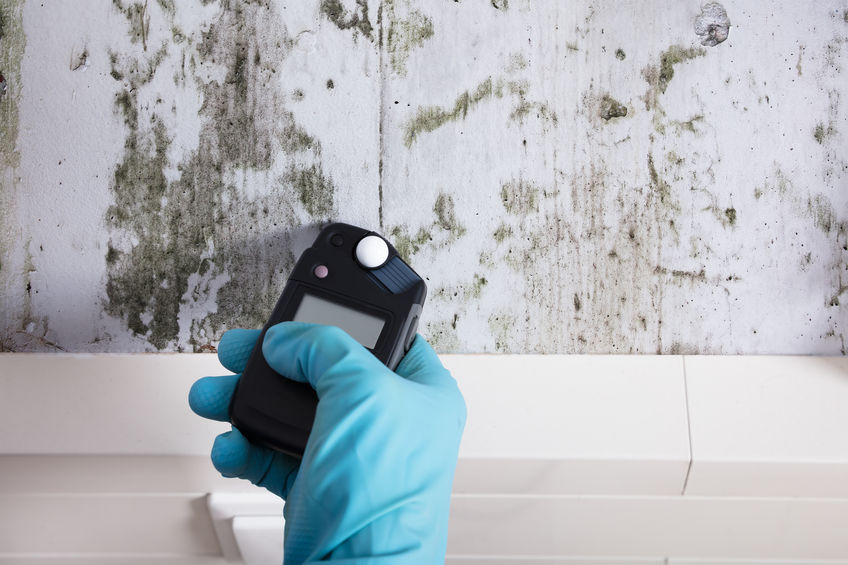
When it comes to mold, guessing is never a good strategy. Mold can hide behind walls, inside HVAC systems, and within building materials, and it is often long before you see visible signs. Ultimately, the only way to know for sure what type of mold issue you’re dealing with is to have a complete, professional assessment.
Air Testing: The Gold Standard for Mold Detection
Ambient air testing (also known as bioaerosol sampling) remains the most effective and widely accepted method in the mold industry for determining whether mold is impacting your indoor environment.
Here’s how it works: a newly calibrated high-flow pump is used with a Zefon Air-O-Cell 75L spore trap cassette. The pump is calibrated at 15 liters per minute and operated for five minutes per sample. This process captures airborne particles, including mold spores—on a sticky acrylic matrix for laboratory analysis.
Why is this so important? Put simply, it’s because it travels through the air. If you’re breathing it, you need to know it.
An essential part of air testing is collecting outside control samples. These establish a baseline of naturally occurring mold spores in the environment. Indoor levels should typically be half or less than outdoor levels. More importantly, certain mold types should never appear indoors at all. Identifying those is critical.
Air testing, when performed correctly and interpreted by trained professionals, provides a clear snapshot of the spore content in your home’s ambient air.
Surface Sampling: Targeted and Specific
While air testing tells us what’s circulating, surface sampling tells us what’s growing.
Surface samples are taken using a sterile cotton swab, clear tape lift, or small bulk material sample. These are analyzed through either a fungi screen or culture analysis (which takes longer but can provide more detailed information).
Surface sampling is especially useful when visible discoloration is present or when we need to identify a specific mold species in a particular area. However, on its own, it doesn’t always tell the full story of your indoor air quality, which is why a combined approach is so important.
The Real Key: Combining Observations, Equipment, and Lab Results
The best way to test for mold isn’t just about collecting samples, it’s also about interpreting them correctly. A thorough inspection blends:
- Detailed visual observations
- Moisture meter and environmental readings
- Proper sampling techniques
- Professional lab analysis
- Expert evaluation using environmental hygiene practices
This approach ensures you’re getting a full assessment.
If you’re in West Palm Beach, Palm Beach County, Martin County, St. Lucie County, or north to Vero Beach and suspect mold may be affecting your home, reach out to us to schedule a professional assessment.